Just looking at lock free code makes me nervous…
Thanks, I was hoping you’d say that!
Claude writes a ton of python scripts to do just that — without being asked. There are some places where it manually edits and reasons about code, and it reviews the scripts output, but if it can write a tool, it seems to prefer to. It uses grep and other linux tools everywhere.
3 Likes
tech engineer here, ranting against AI/ML sometimes looks snub to me, I accept and I have accepted to slide a bit the mastery I had in my tech domain due to advancements I could not entirely follow, and the shift to soft-skilling that in my times was not even a word. I can vibe-code in a few minutes something that the DEV I was supposed to talk with hardly understood in more than a week and have a first (bad) version in a month. Is this good ? I don’t know. Is this sustainable ? I feel not in long term. I see two problems generally:
- How was the AI trained ? with existing tech domain workers and DEVs work it is actually stealing jobs. This is not a good thing, but it is someway similar to hire a 3rd world DEV that trained on open-source projects and working from remote costs less than a “developed” country DEV, and this is something that always happened
- This exponentially augmented development capacity can really enter an end-to-end economy cycle ? Meaning: are there enough paying customers for this speedy SW development that can reach additional paying end customers ? Here I think no, and particularly if the end customers of all these services with AI in the chain are being workforce reduced
english not my first language
2 Likes
I came here to speak on this… we have to watch out. The corporate strategy has always been to burn the commons for fuel, destroy what can’t be privatized and rented and metered. “Embrace, Extend, Extinguish”. All the old heads have stories of IBM or Microsoft being all super evil.
Right now under US copyright law, LLM output cannot be copyrighted, and therefore can’t be licensed (so it defaults to the commons, it can’t be GPL’d). That has implications. Ardour has explicitly prohibited LLM output in its codebase. I have adopted a similar policy in all my OSS work.
I’m really excited about these tools, though, and I have been using them in my practice since 2023. But I only use it for one-off scripting or personal tools. I’ll get it to perform git surgery, I’ll ask it to cite the docs of an unfamiliar API for how to do something. Super cool, and sometimes it spins out annoyingly or hilariously. I’m definitely more productive overall.
But yeah, be careful, OSS is a precious resource. I could see Microsoft burying a bunch of OSS projects in lawsuits because they have the Copilot transcripts of poisoning the codebase with LLM output with too vague a prompt (and there’s no telling what “too vague” means, especially since IANAL and neither is most of us here I bet). All the old heads have stories of Microsoft being super evil in the 90’s, buying up all kinds of cool tech and shelving it, other nasty tricks.
I’m alarmed, but I’m also burnt out on panic so I’m staying playful and creative. I put a global prompt in my Opencode harness about the code generation. I still code by hand, but you bet I got an LLM making sure my editor’s all souped up on every dev tool. Most languages have static commands to rename variables, change types, and so on.
I’m having a blast, and excited to share some work real soon. I’ve been building on your work with the parser, thanks so much for jamming on that stuff.
1 Like
FWIW, I don’t think I’m ranting against LLMs. (BTW I think we should try to be consistent about calling them LLMs.) I am ranting against:
- Exaggerated claims. I already cited the example of the cloned Adobe suite – it’s a perfect example! Guy vibe coded a Photoshop clone in a weekend; was completely floored by this (I admit, if it had been me, I would have been floored too); went online to claim that “software is dead”; then somebody tried to use it and found that 2/3 of it was broken. (I can’t find a citation for that two-thirds figure, but I did find this video showing a lot of broken features being found within seconds: https://www.youtube.com/watch?v=I-Es-R7VUwM .) My take: The LLMs have their capabilities, strengths and weaknesses. There seems to be something strange about interacting with LLMs that causes some people to vastly underestimate the weaknesses and make grandiose claims on the LLMs’ behalf. If the underestimation-of-weaknesses and the grandiosity feeds into corporate deployments where real money and real jobs are involved, I don’t see much good that can come out of that. I can see good that can come out of sober, rational, incremental, carefully tested LLM deployments. But this is not what we are actually seeing.
- LLM or gen-AI adoption being seen as compulsory. If LLMs are meant to empower, then they should empower people to do things in the way that they want. In particular, the kinds of relationships between musicians and listeners that I’m interested in, and the ways that my musical practice embodies those ideals, are not any of the business of LLM proponents. (FWIW, I think the “gen-AI art is just like any other art” position begins with the mistaken assumption that art is first and foremost a product. Sometimes it’s a product, but it’s always a relationship. A large number of music fans are saying that the type of relationship they’re interested in is one where the musicians have had their hands physically on/in the process. In response, the gen-AI crowd basically says “you’re wrong to want that” and then gets surprised when they’re perceived as dismissive and arrogant. I also recognize that some people really do just want sonic wallpaper and they don’t care where the product comes from. That’s fine, as long as hands-on musicians are still able to practice their craft and others are able to appreciate that.)
- The circular-financing con. I’m afraid that the bubble will pop, and tank my 401k, just about the time that I need to start drawing on it. Screw these guys. If they cost regular investors millions, they should go to jail.
- Denial of responsibility for internet security. Agents have committed literal crimes and nobody is responsible. Threaten Altman with jail time and OpenAI will change its tune on security testing real quick.
I probably got more, but I’m out of time for now. Anyway, it’s entirely consistent to be interested in what LLMs can do while being sharply critical of various dumb things that people are doing or saying wrt LLMs.
hjh
3 Likes
This case is about purely computer generated artwork, with zero human intervention. It is unclear if code is art (I am not a layer) and it is unclear how much human intervention is required. So it isn’t that LLM output can’t be copyrighted, it is that copyrighted art requires human authorship.

Remember me?
I agree on the exxageration, that is also the reason I tended to profile really low about the achievements I was able to accomplish using LLMs CLI tools for my paying customers, that BTW were really, really satisfied. But the impact is really high, I repeat, my productivity increased 1000%, and having a very high knowledge of my technical domain (that is not SW development) permitted me to develop specifc domain oriented software with very high quality (customer recognized).
As an electronic music passionate, I also took one of the live coding framework I was used to work with, and added tons of functionalities fit to my workflow. I don’t publish however, I simply use it for me. Last thing I want is to have some modernization luddite make a complaint video about it
completely agree on the long term sustainability and circular financing. I expect the bubble to explode leaving many wounded on the field, but I do not expect this matter to vanish, we are not going back to the world we used to know 20 yrs ago
english not my first language
1 Like
To give another example of how AI companies will lie about absolutely anything, there was a whole bunch of hype recently about how AI discovered security holes in PHP. This didn’t happen. LLMs had nothing to do with finding the issue (which had been known for 2 years), and probably in fixing it (the patch, which is huge, took 2 years to complete).
LLMs are also not particularly good at finding security holes. There are much better tools out there (including ML), and security researchers are also pretty good at finding them if you pay them (and the cost of finding a novel hole with an LLM is enormous, even at today’s massively subsidized rates - so the researcher is probably cheaper). LLMs simply give ordinary joes the ability to exploit known security holes. Which is a problem, but it is a problem because the internet is incredibly insecure because nobody has taken this seriously for 20+ years. Again AI companies are lying about their capabilities, because they are trying to hype their product.
These things are obviously not useless. But they’ve been massively overhyped, and we probably won’t get a good handle on their capabilities until the hypsters have been driven out and these companies are no longer polluting the infospace with their bullshit.
2 Likes
I think a lot of musicians who produce pretty generic, or easy to replicate music (cough - a lot of ambient music, or the kind of loop based music you find tutorials for on youtube, slop dance music, etc) are in trouble. But then there’s a reason I’m not terribly interested in that kind of music.
If LLMs are responsible for producing any kind of music that I would find interesting, it will be due to people messing with (and trying to break) the technology, and probably mixing it with other tools. The kind of mindset that people are currently using with them will not result in anything interesting (unless you’re a big fan of paroxy), and its clear that none of those people aggressively pushing these tools are particularly creative. In fact they seem to hate creative people out of some weird kind of jealousy.
I find ML interesting (e.g. Flucoma), and also the kind of stuff that @Luc_Doebereiner is doing with perceptrons (a pretty old technology, but under utilized for the kind of cybernetic stuff that I like). But that’s because they fit my process. LLMs don’t, and it’s hard for me to imagine that would fit many musicians’ process.
3 Likes
So neither of us are lawyers but we both like to parse language; in this context “art” is like, a human-produced work. Like, have you ever heard the term “prior art”? So this distinction isn’t necessarily useful here.
That’s exactly why it’s a risk! And a hassle. Now you have to save all your prompts to prove it was you, and the standards are still unclear. But they’re pretty conservative about it so far. This document from the US Copyright Office says:
The Office concludes that, given current generally available technology, prompts alone do not provide sufficient human control to make users of an AI system the authors of the output. Prompts essentially function as instructions that convey unprotectible ideas. While highly detailed prompts could contain the user’s desired expressive elements, at present they do not control how the AI system processes them in generating the output.
It’s both. Those two statements follow from each other, they refer to the same thing. If copyrighted art requires human authorship, while an LLM is not a human, then LLM output cannot be copyrighted. If LLM output cannot be copyrighted because an LLM is not human, then copyrighted art requires human authorship.
And if it can’t be copyrighted, then it can’t be licensed. That means pure LLM output is incompatible with the GPL license and should not be accepted into any GPL codebase if we’re going purely by the government policy and existing law.
Some people make the argument that nobody’s gonna sue about it, and there’s no law specifically against LLM content, so why worry?
Dude, large corporations exist to privatize and profit, that’s what the machine does, we built it that way and it works great. It always revs out and burns the entire culture for fuel when you don’t keep your hand on the throttle. I won’t soapbox too hard, but yes, IBM or Oracle or Microsoft or any number of powerful actors would try to ban OSS and “open a new market” for renting the right to compute if they could possibly afford the capital. They’ll do clean air and water too if we let them. They bottle up culture and sell it back to us too. It’s not an outrageous truth or political call to action, it’s just how that specific powerful machine works. You have to defend the commons and the art and the people. That machine will never care, it doesn’t know how and it never will, that’s not its design. That’s our job.
And since the Copyright Office’s document also says that existing case law is enough to decide copyrightability, that kind of erodes the “no law specifically against it” argument to me.
IANAL so I don’t know the economics and legal paths of how they’d end up with the right to sue. Maybe they’d lobby for new regulation instead. I’m just more saying it’s reasonable not to want to risk it, and some projects have made the same call already. I’m prohibiting LLM output in the GPL codebases I control, and I don’t vibe-code anything I plan to share.
I do use LLM’s and I think they’re awesome.
Does making music even make sense anymore?
Making music makes sense and will always make sense, if it makes sense to you!
I have very much enjoyed reading this thread. These conversations are (of course) floating around all kinds of circles, but, hearing thoughts from all of you specifically feels more meaningful to pay attention to, so thank you for that.
Much has been said, so I don’t know what to add, instead, I’ll just highlight a few sentiments that resonated with me.
4 Likes
The view from a plugin developer:
2 Likes
I believe AI is an agent-like tool, much like machine translators, calculators, and VST plug-ins: it carries out tasks on behalf of its users. How people choose to use it is up to them.
Would it be useful to start a separate thread for sharing both positive and negative experiences with AI?
Possible topics could include:
- Composition (excluding performance)
- Composition and performance
- Music-making with SuperCollider, Max, Pure Data, or Csound
- Music production with DAWs
- Music notation and scoring software
- Using AI for SuperCollider coding assistance
- Research for writing
- Proofreading and editing
- Expanding or refining drafts
- Fact-checking and reference verification in specialised fields
- Creating learning materials for students or for personal study
I sometimes get good results from a simple prompt, but more often than not it takes considerably more time than expected to achieve a satisfactory result. I’m not sure whether this is due to exaggerated marketing claims surrounding AI or to my own ineffective use of it.
In programming, for example, code that eventually works after a long cycle of prompts, AI-generated responses, testing, and feedback is not necessarily well designed, logically sound, or concise. The resulting code can often be quite convoluted.
Sharing these kinds of experiences could help people better understand both the strengths and limitations of AI, and learn how to use it more effectively as a tool. It may also help distinguish between unrealistic expectations created by marketing and the actual capabilities of current AI systems.
I’m asking this before starting a new thread because I want to make sure it would be in line with this forum’s Code of Conduct.
That’s a funny one. Often enough I have to fact-check the LLM… Just today I asked Claude for help with some obscure problems that are hard to google. It made several grave mistakes. In one case it repeatedly – and, of course, very confidentally – made a completely wrong assertion about how a certain well-known CMake feature works. Only when I pressed it for the third time and presented evidence, it finally conceded and apologized. (“You are right to call me out on that and I understand your frustration.”  ) Someone else, who doesn’t have the background knowledge, might have just accepted the answer. I find this pretty worrying. Not every topic is as harmless as C++ build systems.
Yes, most of the time the LLM actually gives decent answers. The problem is: how do you know which is which? Of course, humans also make mistakes, but the infuriating thing about LLMs is that they are at the same time extremely capable and very dumb and you can’t really tell it apart because they use the same overconfident voice and seemingly well-structured arguments. With humans you can at least often tell when they are bullshitting 
It works best when it can verify is own output. Try letting it just write the cmake, it will run it and correct it’s mistakes. It will still occasionally doing things in a slightly roundabout way, but far less often.
I’ve found they are generally more accurate the larger the task you give them, particularly when you give them tools to measure when they are finished - like compiling without errors, or you can even ask them to do a separate review stage, or introduce specific hooks that run after every change.
1 Like
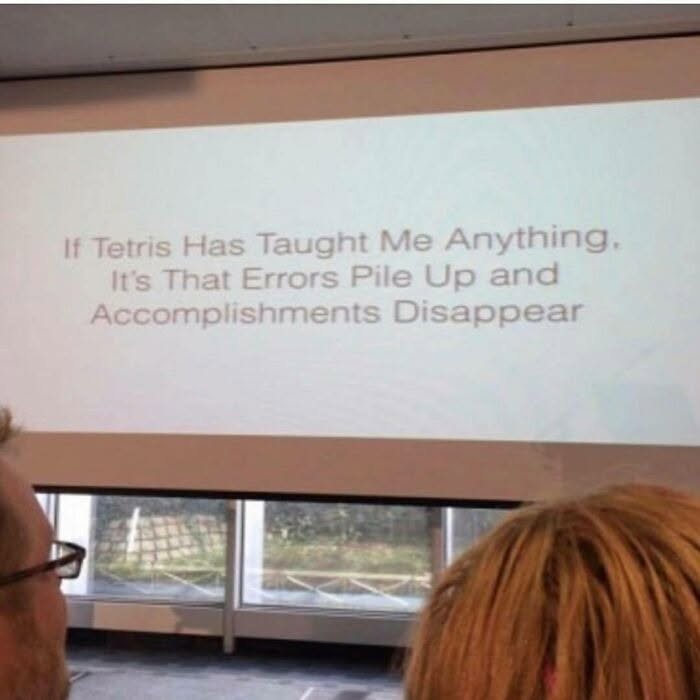
To be clear, I’m talking about chatbots, not coding agents. The overall issue is not restricted to code 
Yeah I think generic chat bots alone are not useful for data retrieval because they aren’t connected to a database and have no way of verifying their output. The internal connections of a LLM is a terrible data structure for a database.
I think that’s why coding (including mathematic lean) works so well, you can get the compiler to verify it.
1 Like
FWIW, for a presentation in a couple weeks, I just wrote a prompt describing in detail one of the examples from the talk (a granulated delay effect). My prompt didn’t contain any implementation details but it was very detailed about the windowing and s&h of delay time. I included this much detail because I wanted to see the best case, where the prompt is like “I know what I’m doing, this is going to work” rather than some vaguely DSP-related word salad. I gave it to DeepSeek (I’m located in the mainland, DS is easy to access), with the reasoning trace turned on. So:
- Negative factor: A decent but not top-tier model.
- Negative factor: A niche programming language as opposed to Python.
- Positive factor: Detailed prompt based on proper audio engineering principles.
Result: 81 seconds thinking. A functioning SynthDef, except something funny that happened at the beginning of the synth, for which I’d have to dock a couple percentage points, but 98% is pretty good. (I might troubleshoot that tomorrow, but it’s late now.) It also recognized on its own that overlapping Hann windows at a distance of half a cycle sum to 1 and explained that back to me (my prompt specified the overlap distance but didn’t say why; the clanker figured out why and volunteered the correct explanation).
I was all set to say “well it didn’t quite get it right” but actually it… kinda did.
So that’s one data point on the current state of things wrt a domain-specific requirement, in a middle-tier model. Better than I expected, by quite some distance.
EDIT: But then I just saw a clip where an AI teacher insists that “seventeen” is spelled “seveen” and repeatedly corrects the adult student, who continues trolling for awhile. Which is the problem I have with this stuff: a few good results make you complacent, and then it can slam you with a startling error while you’re not watching carefully.
hjh
4 Likes