NOTAM Meetups: Spring 2026

Hi all!

We’re back with another season of SuperCollider Meetups facilitated by our friends at Notam! These online meetups will take place approximately once a month on Zoom at 7pm CET (Oslo Time):

SuperCollider meetup:
Meeting ID: 974 3258 0111
Link: Launch Meeting - Zoom

At these meetups, SuperCollider users (usually 2 per meetup) present a project, class library, instrument, or artistic practice featuring our favorite audio programming environment. These presentations are informal, vary in their format, and are intended to showcase the diversity and flexibility of expression our beloved SC permits.

If you’re interested in presenting a project/workflow/tool/whatever at one of the Meetups, send me a DM and I’ll find a slot for you - absolutely everyone is welcome to share! In the week before each meetup I’ll return here to present info about the forthcoming presenters, so be sure to follow this thread via the :bell: on the right!

All community events at Notam fall under the NOTAM Code of Conduct to make them as inclusive as possible. If you have accessibility related requests or questions about the meetup, please send me a message and I’ll do what I can to address them! (Regarding this, I still haven’t been able to find a secure video chat solution that doesn’t require login; these meetups have had considerable issues in the past with disruptive bots, trolls, etc. so until I find a suitable solution, the meetups require a Zoom account.)

Despite frequent requests, the meetups are unfortunately not recorded. One of Notam’s goals with these meetups is to keep them casual, inclusive, and low-pressure, and a previous host of the meetups found that recording them led to less engagement, fewer questions, etc. from participants. Also, we don’t really have the infrastructure to store/edit/publish the footage (Notam also hosts meetups for Max/MSP, spatial audio, etc.). Buuuuuttt…that doesn’t stop users/presenters from sharing their notes/slides/code on this forum or elsewhere!

The meetup dates for spring 2026 will be:

2026-03-26T18:00:00Z
2026-04-22T17:00:00Z
2026-05-20T17:00:00Z

Looking forward to see you there!
8 Likes

Our first presenter of the spring is @nescivi!!

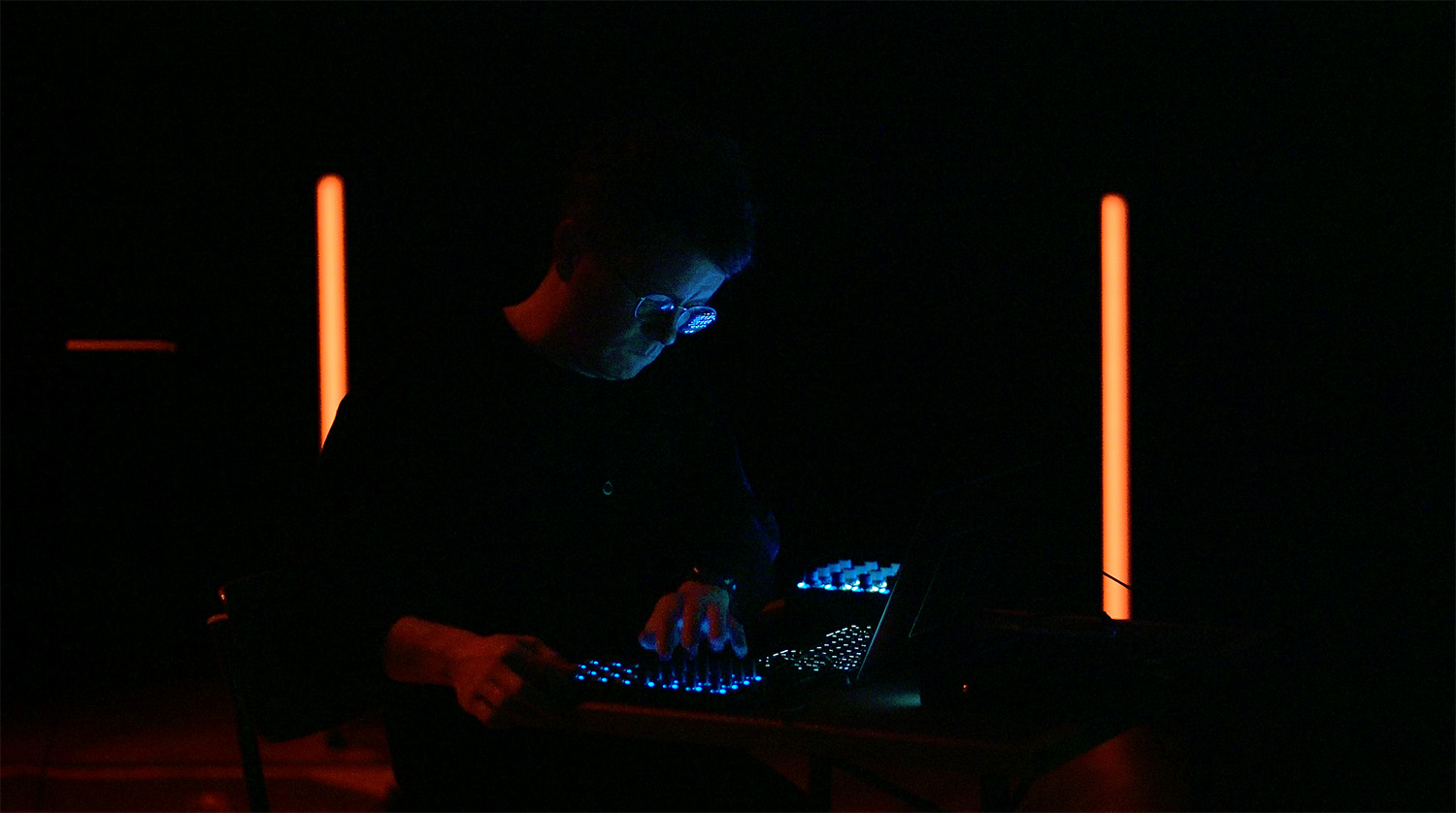
In the project Dynamic Light Patterns Studies, I am exploring the compositional and performative possibilities of new light instruments to generate dynamic light patterns. From an interdisciplinary background in electronic music and interactive art, I intend to research how I can make a performative experience where light is a dynamic, temporal visual experience, rather than a static image. In the talk I will show how I use the Ledscape software to drive the individual LEDs of the ledstrips, together with SuperCollider.

Link to video: Dynamic Patterns of Light Study #0

/========/

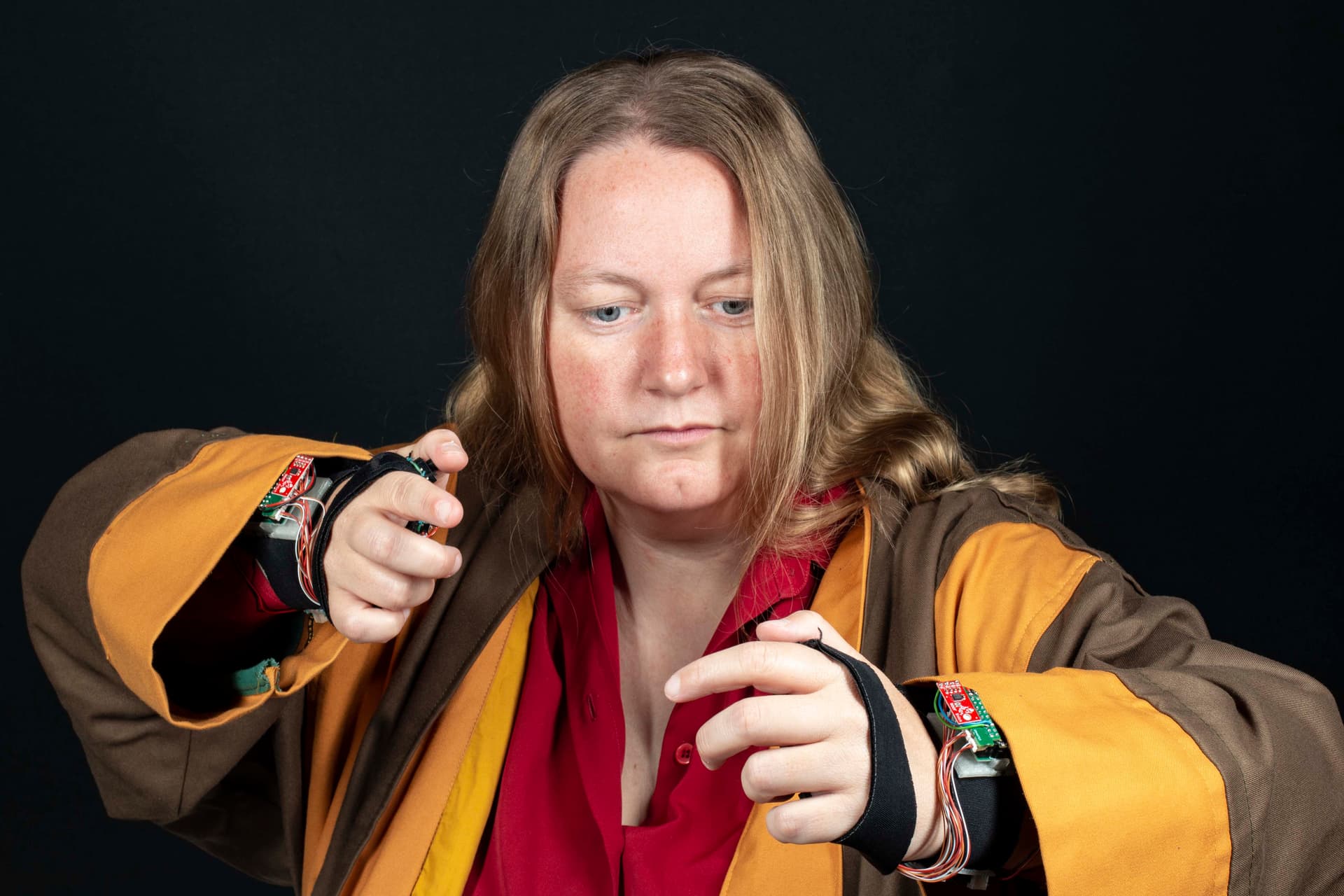
Marije Baalman is an artist and researcher/developer working in the field of interactive sound and light art, based in Amsterdam. She makes music, music-theatre performances and installations. She is interested in the realtime components of the work, composing processes, behaviours and interaction modalities. Topics that she addresses with her work are the nature of interaction between and entanglement of humans and technology, the influence of algorithms on society and the human experience, and environmental change. In 2022 she published: “Composing Interactions - An Artist’s Guide to Building Expressive Interactive Systems” with V2_ in Rotterdam. She is a member of iii and Grond.

3 Likes

Also presenting on Thursday will be @bjarnig!!

In this talk, I reflect on the relationship between fixed structures and dynamic musical processes in my current artistic practice. Using three recent projects as points of departure, I examine how relatively stable code frameworks interact with the evolving and contingent nature of sound production and compositional decision-making. I explore how these frameworks operate not simply as technical tools but as environments that both constrain and enable musical activity. The presentation focuses on how compositional ideas emerge through interaction with these systems, where musical outcomes are shaped by iterative processes, feedback loops, and acts of listening.

/========/

Bjarni Gunnarsson is a composer and programmer interested in process-based sound, digital synthesis, and algorithmic composition. His work explores how sound and software interact, examining the influence of algorithms on musical behaviour and the contact points between system building and composition. He creates works that foreground behaviours, actions, and evolving or unstable forms, where structure emerges through interaction rather than prescription. His recent research focuses on persistent synthetic environments, live coding, digital interrupts, database systems, and machine listening for sound synthesis. Bjarni teaches at the Institute of Sonology, Royal Conservatoire in The Hague.

https://soundcloud.com/bjarni

3 Likes

See you at the meetup in just over 30 minutes!

I’m looking very much forward to hear from @julian on Wednesday - I hope you are too!

//====================//

A walkabout between music informatics and epistemic media.

Julian Rohrhuber works in an interdisciplinary field that combines philosophy, informatics, anthropology and art. Together with his students in Düsseldorf, he develops art as a form of theory as well as teaching as a mode of research. As a member of the community, Julian (telephon) has followed the development of SuperCollider for a long time, contributing both to its formal and improvisational character.

I have always found sound programming interesting as a way to learn by experiment, to collaborate and play with people in different disciplines. Helping out in the SuperCollider project has meant to contribute and develop ideas that come from my mixed background. For this presentation, I would like to focus on the early inspirations that led to the live coding movement in computer music and discuss what role they play in our work in the research in music informatics and epistemic media. Also, I would like to discuss conceptual decisions in the development of SuperCollider. If the audience is interested, we can touch upon some related topics covered in projects and publications.

Websites:

Works:

4 Likes

By the way, tomorrow’s meetup will be held on Jitsi instead of Zoom - here’s the link:

The meetup is starting in 10 minutes, reminder it’s at the Jitsi link above!

Next week is our last SC Meetup before the summer, and I’ve planned a collection of SuperCollider-adjacent presentations that I think will be very inspiring. First, we’ll hear from @Sam_Pluta and @tedmoore:

Sam Pluta is a composer, electronics performer, and sound artist. Though his work has a wide breadth, his central focus is on using the computer as a performance instrument capable of sharing the stage with groups ranging from new music ensembles to world-class improvisers. By creating musical systems of shared agency, Pluta’s vibrant sonic universe focuses on the visceral interaction of instrumental performers with reactive computerized sound worlds. He is a composer/performer co-director of Wet Ink Ensemble and has performed with Peter Evans Ensemble, Rocket Science, and PANG!, amongst other world-class new music and improv-based groups. Sam is the co-author of the MMMAudio creative coding environment.

Ted Moore (he / him) is a composer, improviser, and intermedia artist whose work fuses sonic, visual, physical, and acoustic elements, often incorporating technology to create immersive, multidimensional experiences. Ted’s music has been presented by leading cultural institutions such as MassMoCA, South by Southwest, Lucerne Forward Festival, The Walker Art Center, and National Sawdust and presented by ensembles such as Talea Ensemble, International Contemporary Ensemble, the [Switch~ Ensemble], and the JACK Quartet. Ted has held artist residences with the Phonos Foundation in Barcelona, the Arts, Sciences, & Culture Initiative at the University of Chicago, and STEIM in Amsterdam

//================//

We will be sharing MMMAudio, a new audio-focused creative coding environment that uses Python as its scripting language and Mojo for real-time audio processing. MMMAudio is designed to merge the practices of instrument design and DSP innovation. It is highly efficient, is capable of multi-core operation, enables single-sample feedback and oversampling at all levels of DSP, utilizes modern CPU technologies like SIMD across the codebase, and is designed to integrate industry standard AI and data science tools like PyTorch and sci-kit learn into both “control”-side and “audio”-side operations. It is available at: www.github.com/spluta/MMMAudio

5 Likes

Also on Wednesday, we will hear from @davidpirro:

David Pirrò is a sound artist and researcher based in Graz, Austria. His work spans interactive compositions, sound installations, and audiovisual and electroacoustic pieces in which performative and spatial dimensions are central. Working from a radically inclusive perspective, he seeks compositional approaches in which the work is constructed through the mutual interaction of the agents involved in its performance. David is lecturer and senior scientist at the IEM (Institute of Electronic Music and Acoustics) in Graz. He was Principal Investigator of Algorithms That Matter and currently of Speculative Sound Synthesis (FWF PEEK AR 713-G).

In this talk I will share henri, a domain-specific language for sound synthesis as dynamical-systems simulation that I have been developing as part of my artistic and research practice. I will introduce my artistic practice with these kinds of systems and then focus on a family of non-linear adaptive oscillators (Kuramoto networks and Hopf oscillators with adaptive frequencies) which have been the working material of a longer arc of work. Switching from henri to SuperCollider, I will share a small set of UGens that simulate networks of these oscillators at audio rate, alongside code and example patches.

1 Like

Looking forward to see some familiar faces/usernames at the last Notam Meetup for the spring - starting in 30 minutes! :slight_smile:

Is it the same Jitsi Meet link as last time?

It seems not, but I can’t find a link. @Mike_McCormick could you be so kind and post it again here? (nobody is here https://video.imm.rsh-duesseldorf.de/notam)

Oh I see it’s the Zoom link from top of thread.
Best,
Paul

Sorry, I totally missed these messages! Glad you both found it after all - I still have to coordinate with Notam which link we’ll use going forward…the zoom link was already posted on their website/social media, but I’m going to try to make a case to use jitsi from the fall onwards. Thanks again @julian for donating the room!

1 Like